
Corrosion Prevention for Crevices in Metal Conveyor Belts
Release time:
2026-05-25
Crevice corrosion is primarily caused by electrochemical non-uniformity within a medium, resulting from the presence of narrow gaps or crevices. Therefore, protection against crevice corrosion can be addressed by observing the following key points:
1. Rational Design to Avoid Crevices: For instance, welding is preferable to riveting; butt welding is superior to lap welding; and welding operations must be executed to a high standard to prevent the formation of pinholes. In screw-fastened assemblies, low-sulfur rubber gaskets or dense packing materials should be utilized, and the mating surfaces can be protected with a protective coating. Furthermore, designs should avoid creating areas where water can accumulate; during maintenance, frequent cleaning is essential to remove dirt, debris, and other contaminants.
2. Cathodic Protection When Crevices Are Unavoidable: In situations where design constraints make it impossible to eliminate crevices, cathodic protection methods may be employed—for example, by utilizing sacrificial zinc or magnesium anodes in marine environments. However, when adopting this approach, particular attention must be paid to the potential risk of hydrogen embrittlement.
3. Use of Corrosion Inhibitors: Since corrosion inhibitors often struggle to penetrate deep into narrow crevices, paints containing inhibitors can be applied to the mating surfaces. For example, steel components can be protected using paint doped with PbCrO4 (lead chromate), while aluminum components can be protected using paint doped with ZnCrO4 (zinc chromate). For sheet metal components, packaging paper impregnated with vapor-phase corrosion inhibitors can be used as a separator between the layers.
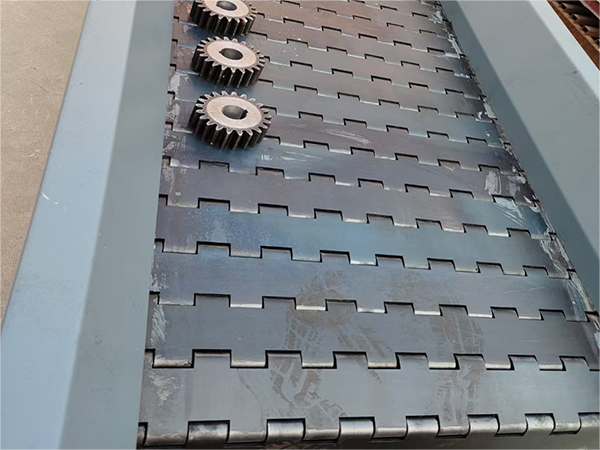
4. Substitution with Suitable Materials: For critical components, it may be advisable to switch to alternative materials that possess superior resistance to crevice corrosion—such as high-chromium, high-molybdenum stainless steels. (Note: The maintenance considerations regarding conveyor belts discussed here primarily pertain to modular-link stainless steel belts—such as "Great Wall" style belts—and belts equipped with side baffles.)
Latest News
CONTACT US
Tel : +8618563755235
E-mail : sale@cnsdgroup.com
WhatApp : +8618563755235
Add : Room2306,Wanda Office Building J1, 57 Industrial South Road, High Tech Zone,Jinan City,Shandong province,China.


GET A FREE QUOTE
Copyright : Shandong Shengda Machinery Equipment Co.,Ltd. Powered by : 300.cn jinan2 Seo Business License
